Showing posts with label Jared Stepp. Show all posts

Sunday, August 7, 2011

Sunday, July 24, 2011

Sunday Snapshot XXIV

Oh that ice cream?  Ya, you can get eight of those for a dollar.
Photo Credit: Jared Stepp

Friday, July 1, 2011

Safer Travels

In Sololá, life is slow and tranquil.  Strangers greet one another in passing while children walk to and from school.  While where we live is a far cry from the grim stereotypes that all to often color ideas of this country, it's important to acknowledge the traces of truth that lay at the root of these negative impressions.  Though our work doesn't take place in Guatemala City, the struggles there are real and deserve the same recognition as our encounters in the mountains.  Only in capturing both sides can we paint a full portrait of Guatemala.  Here, Jared Stepp shares about the dire public transportation situation in the capital city:

Guatemala City is written up as one of the most dangerous cities in Central America due mainly to gang violence. However, the government and several independent companies have recently been making an effort to identify specific problems and work out solutions.  One of the biggest problems a middle to lower class resident of Guatemala City faces is bus transportation. The bus business in Guatemala City is a fierce one, but there's progress on the horizon.  Armed guards were hired starting in January 2011 to stop any kind of violence that may have occured towards the driver or the passengers. You might think it's a bit off-putting to see a man in a suit with a machine gun at the front of your bus, but here in Guatemala it's actually nice to know that that guy is there for your safety.

Another way in which they are trying to reduce crime on the buses is by switching from fares to ticket systems. This way crooks would know that the bus driver and his helper don't have a lot of quetzales in their pockets, and thus they wouldn't be worth robbing. The drivers would only have ticket papers that they would redeem. Guatemala City has already seen lowered crime rates on buses and the city plans to start implementing more of these routes before Christmas this year. They haven't fully figured our all the nuts and bolts but, local residents have responded positively to the news of this change.

I am also proud to say that Guatemala City, as of a week ago, has introduced women and children only buses on the main routes to address harassment concerns. The buses are now running during rush hours, nights, and early mornings. Though the bus drivers and security guards are still male, they are strict about the rest of the patrons. This idea stemmed from how well Mexico City's woman's only transit system is working.  Personally, I'm hoping that this system stays in place and keeps the ladies and babies safe.

Overall, in the last two years the changes they've made in the transit system have significantly lowered transit-specific crimes and they hope that the future changes will continuing lowering it as well.

Looking forward to safer travels,

Jared

Thursday, May 5, 2011

From the Fields to the Market

“Bananos, bananos, doce por cinco,” exclaimed one of the Mayan women sitting on the ground with her display of assorted fruits gathered around her. She looks at me in desperation, eager to sell me her bananas, afraid that I may visit the other fifty stands in the Sololá market selling the exact same thing. Lucky for her, bananas are exactly what I came here to find, and before I knew it I was negotiating a price for a dozen bananas, and receiving a black plastic bag stuffed with my purchases. Looking up from the hand that had been wrinkled by age and hard work, she flashed me a smile. She seemed pleased with yet another sale.

In Guatemala, fifty percent of the labor force works in agriculture. There are two main geographical regions that account for the majority of the international trade market. Their cash crops include coffee, sugar, bananas, cotton, and cacao (the plant used to produce chocolate). First, the highlands of Guatemala where we live grows primarily coffee and corn. The Highlands region accounts for a huge portion of the country because of the Sierra Madre mountain chain. Here, the majority of Mayan people farm their own land but are expected to give a large portion of their crops to the government for use in international trade. The bigger issue however is that in each generation, the land that a family sustains itself on is parceled up amongst all male offspring, dividing the terrain into smaller and smaller pieces.  This is why you see crops now growing on the sides of steep mountains.  Farmland is consistently being over-used and deforested, not to mention hit by heavy rains that cause landslides making the terrain less crop sustaining in the first place.  Farmers are simply running out of space.
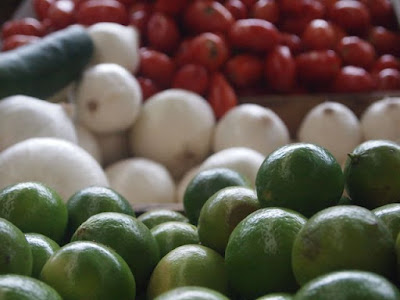
Climbing down from The Highlands on either side of the country lie coastal plains that allow for different farming conditions. Here they grow primarily bananas, sugar cane, and cotton. Recently I learned that 2% of the population on the coast owns 70% of the productive farmland. Private estates, called fincas, owned by wealthy landowners hire laborers to work and live with their families on this land. Fincas are run like tiny villages where everyone living on them rarely if ever leave because they are indebted to the finca owners by means of exploitation. Very little of these crops are used for domestic consumption; most are sold on the world trade market. The rolling tropical plains of the coastal area mean that there is more space, less overuse of farmland, and thus a higher quality of crops. Here it is not the land, but the people that are exploited.

Though, the people of the Highlands region own the land, they are running out of space which has pushed them to the coast to work for wealthy private land owners (multinational food corporations). Because of the immense pressure from the international market that, the rich get richer, and the poor get poorer.  The poor working class needs a break from the government in both regions of the country. In The Highlands, they need some leniency to be allowed to keep more of their crops for themselves and their families, providing greater food security and a more robust economy in domestic markets. As for the coastal area, the government should support small-scale famers by selling small plots of land for reduced price or by compensating laborers more fairly as compared with the land owners they work for.

The end of the war here in Guatemala (in 1996ish) brought a change of ownership of land all over the country because displaced Mayans were never able to regain control of their land.  So today, what little crops they can grow, they sell in the markets like the one I go to in Sololá. As I walk through our market I can only think now of how a little change like acknowledging the labor rights laws or protecting the interests of small farmers would help the people in my community. Passing the numerous stands in the market now bring up questions. How did these bananas get here? Where did they come from? And finally, could I still buy them if I knew they came from exploited hands?

Jared Stepp

Monday, November 15, 2010

Spice Up Your Life

We thought you guys might enjoy hearing about our work in different way tonight, so here's Jared to tell you more about a community celebration we were a part of in early October.  Hope you enjoy.


Monday, November 8, 2010

The Recycling Habit

      Walking through the streets of Guatemala, you find trash scattered around and piled up, ignored as a problem in many parts of the country.  Generally, NGOs in Guatemala either focus on environmental education or on the economic growth of an impoverished area;  Long Way Home is working towards both. This non-profit is educating the community in Comolapa, Guatemala by building a school with recycled waste materials. This idea of alternative building isn’t new, but they are using this project to provided better education and employment opportunities. They are changing the mindsets of the people by demonstrating that the trash they throw out on the street really can be of use and of value.

     Hudson, Dana, and I had to opportunity to visit Comolapa and the Long Way Home team. We saw first-hand the construction of the main vocational school. As we climb up to the site from the town below, a large structure, made of tires, came into focus.  It was amazing to me that they had built this seven roomed structure with all recycled tires. Walking inside, the ceiling was decorated with skylights made from different colored glass bottles.  This was one of about five projects they have planned for the school’s campus.  The classrooms up on the hill, though not yet under construction, will be made  out of earth bags (polypropylene sacks filled with soil - we didn't know either).  Other buildings will be constructed with plastic bottles packed with trash gathered in the community.

     Not only is Long Way Home providing a school for the community but they are raising the bar by demonstrating efficient and effective ways to be environmentally friendly. With trash piling up throughout the country, building schools with recyclables is only the start of the solution. It is wonderful to meet people in Guatemala that have such an inspirational drive to improve life in this country.  Our hope is to educate our community in a similar light, but maybe not with a massive construction of tires.

Most exciting, Long Way Home is a finalist in the BBC World Challenge Competition.  If you have a moment to vote for them online, it would go along way towards helping raise awareness for Guatemala and environmental issues.

Best,
  Jared Stepp